Narrative role
If Identity Echo asks who is real, and Privilege Phantom asks what an identity can do, the Trust Broker asks how access spreads once trust is established between identities and systems.
A central identity node that spreads access through relationships rather than direct force. The Trust Broker links users, systems, and permissions together, turning isolated risks into connected threats across the environment.
This image deepens the visual language of the Identities chapter by moving beyond individual deception and into visible identity relationships.
The bright outdoor security district remains consistent with Chapter 3’s tone, but the danger here is more systemic. Instead of a single deceptive figure, the scene centers on a networked identity hub that connects multiple threats together.
The glowing blue lines, floating access symbols, and linked entities make the Trust Broker feel intelligent and structural. It is not simply another enemy standing in the player’s way — it is the source of relationship-based power across the battlefield.
This artwork helps define the chapter’s shift from individual identity problems into trust propagation, role inheritance, and connected access paths.
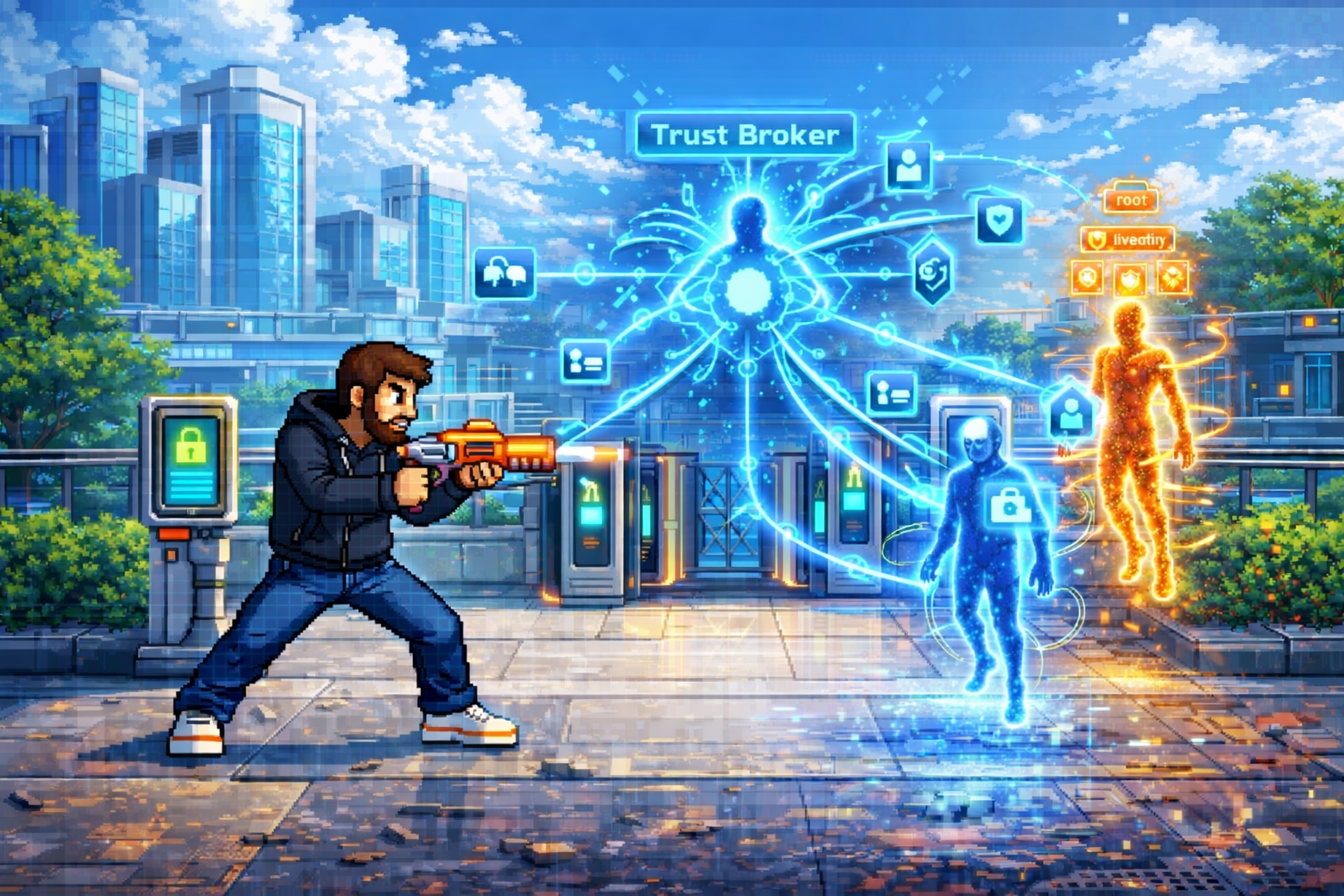
The Trust Broker is the third major Chapter 3 enemy and expands the chapter from identity and privilege into relationships, inheritance, and networked access.
If Identity Echo asks who is real, and Privilege Phantom asks what an identity can do, the Trust Broker asks how access spreads once trust is established between identities and systems.
A support and network-control enemy that strengthens other threats, opens indirect access paths, and forces the player to break connections before the area can be stabilized.
Group inheritance, role nesting, trust chains, indirect privilege expansion, and the identity graph relationships that can quietly make a secure-looking environment dangerous.
The Trust Broker should feel intelligent, connected, and strategically important rather than loud or physically dominant.
It should constantly form and reform links between enemies, checkpoints, and access nodes, making the environment feel alive with identity-based relationships.
Connected enemies may gain shields, new movement permissions, or temporary access to restricted areas until the Trust Broker’s links are broken.
The player should need to trace connections, destroy or interrupt the links, and only then expose the central node for direct damage.
Chapter 3 now has three distinct types of identity risk: imitation, excessive authority, and inherited relationships.
Identity Echo is dangerous because it looks trusted. Privilege Phantom is dangerous because it carries too much authority. Trust Broker is dangerous because it quietly spreads access across connected systems and identities.
Trust Brokers connect identities and systems together, spreading access through hidden relationships and turning isolated risks into coordinated threats.