Narrative role
If the CVE Swarm shows how exposures accumulate, the Exploit Weaver shows what happens when those exposures are actively weaponized and connected across an environment.
A hostile control enemy that turns scattered vulnerabilities into active attack paths. The Exploit Weaver does not rely on speed alone — it spreads compromise by connecting systems, amplifying pressure, and transforming nearby risk into coordinated danger.
This image expands the visual language of the Exposures chapter by shifting from pure swarm pressure to a more deliberate, connected threat that controls the battlefield.
This scene presents the Exploit Weaver as a dark, orchestrated force within the same storm-driven cityscape established by the CVE Swarm. The lightning, rain, and industrial skyline keep the chapter visually consistent while pushing the tone into something more predatory and intelligent.
The glowing core suggests active exploitation, while the tendrils reaching across the scene make the enemy feel like it is spreading control rather than simply attacking head-on. The design reads as something that links, infects, and directs surrounding systems as part of a larger compromise.
Like the other enemy pages, this artwork serves both as a polished project showcase and as a visual foundation for future gameplay behavior, sprite work, and animation design.
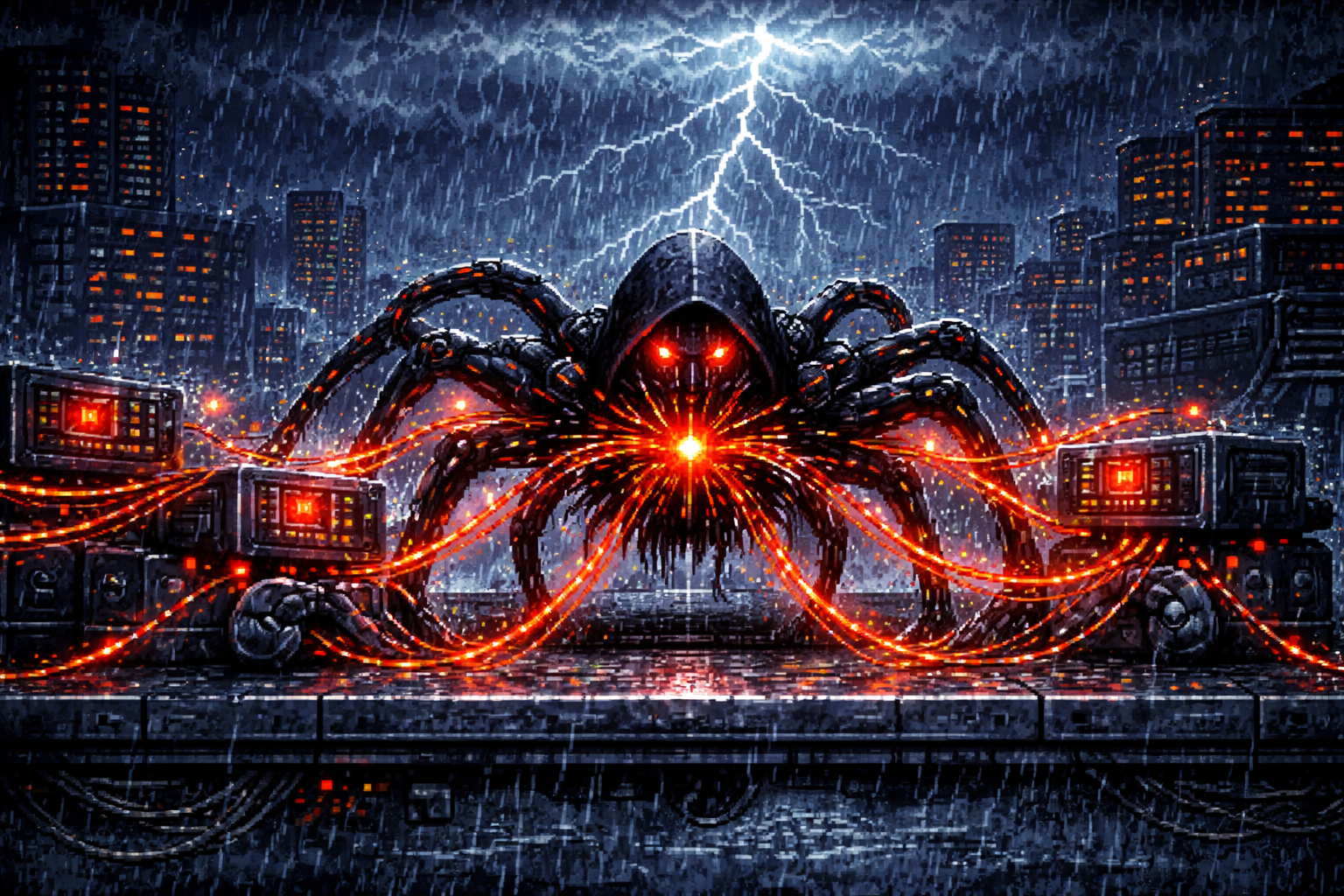
The Exploit Weaver is the second major Chapter 2 enemy and represents the shift from vulnerability buildup into active exploitation and attack-path creation.
If the CVE Swarm shows how exposures accumulate, the Exploit Weaver shows what happens when those exposures are actively weaponized and connected across an environment.
This enemy is designed as a control and area-denial threat. It anchors itself into the environment, creates linked hazard zones, and forces the player to break its connections before its core can be attacked safely.
Exploit chaining, lateral movement, and coordinated compromise — the moment where vulnerabilities stop being passive issues and become part of an active attack path.
The Exploit Weaver should feel less like a rushing enemy and more like a hostile force that takes control of the battlefield.
It should feel anchored and deliberate, moving with purpose rather than speed. The danger comes from where it reaches, not how quickly it charges.
Its cables or tendrils should create damaging lanes, corrupt nearby nodes, or strengthen other nearby enemies, especially in Chapter 2’s storm-heavy environments.
The player should need to destroy connection points first, then expose the core, then attack during a brief opening. This makes the enemy feel tactical instead of purely aggressive.
Chapter 2 now has two distinct enemy identities: one based on buildup and one based on coordination.
The CVE Swarm overwhelms the player through speed, numbers, and stacking danger. It is chaotic, fast, and direct.
The Exploit Weaver is slower and more deliberate. It spreads compromise by linking systems together, controlling space, and turning nearby risk into a coordinated threat.
Exploit Weavers connect vulnerabilities into active attack paths, turning scattered risk into coordinated compromise.