Narrative role
The CVE Swarm marks the shift from hidden asset visibility problems to active exposure pressure. It forces the player to react immediately instead of methodically scanning the environment.
A fast-moving cluster of vulnerabilities that builds pressure through speed and volume. Individually weak, but dangerous in numbers, the CVE Swarm represents how unresolved issues can pile up and quickly become overwhelming when left unchecked.
This image establishes the visual language of the Exposures chapter: darker skies, more immediate aggression, and danger that builds through motion and density.
This scene shows the Operator engaging the CVE Swarm in the middle of a storm-driven exposure zone. Unlike the hidden threats of Chapter 1, the danger here is active, visible, and rapidly escalating.
The glowing cluster is meant to feel unstable and compressed, like a vulnerability graph collapsing into a hostile shape. The contrast between the Operator’s orange signal weapon and the swarm’s red-orange hazard energy helps reinforce the visual tension of the encounter.
Like the Chapter 1 enemy pages, this artwork serves both as a project showcase and as a foundation for later gameplay, sprite, and animation work.
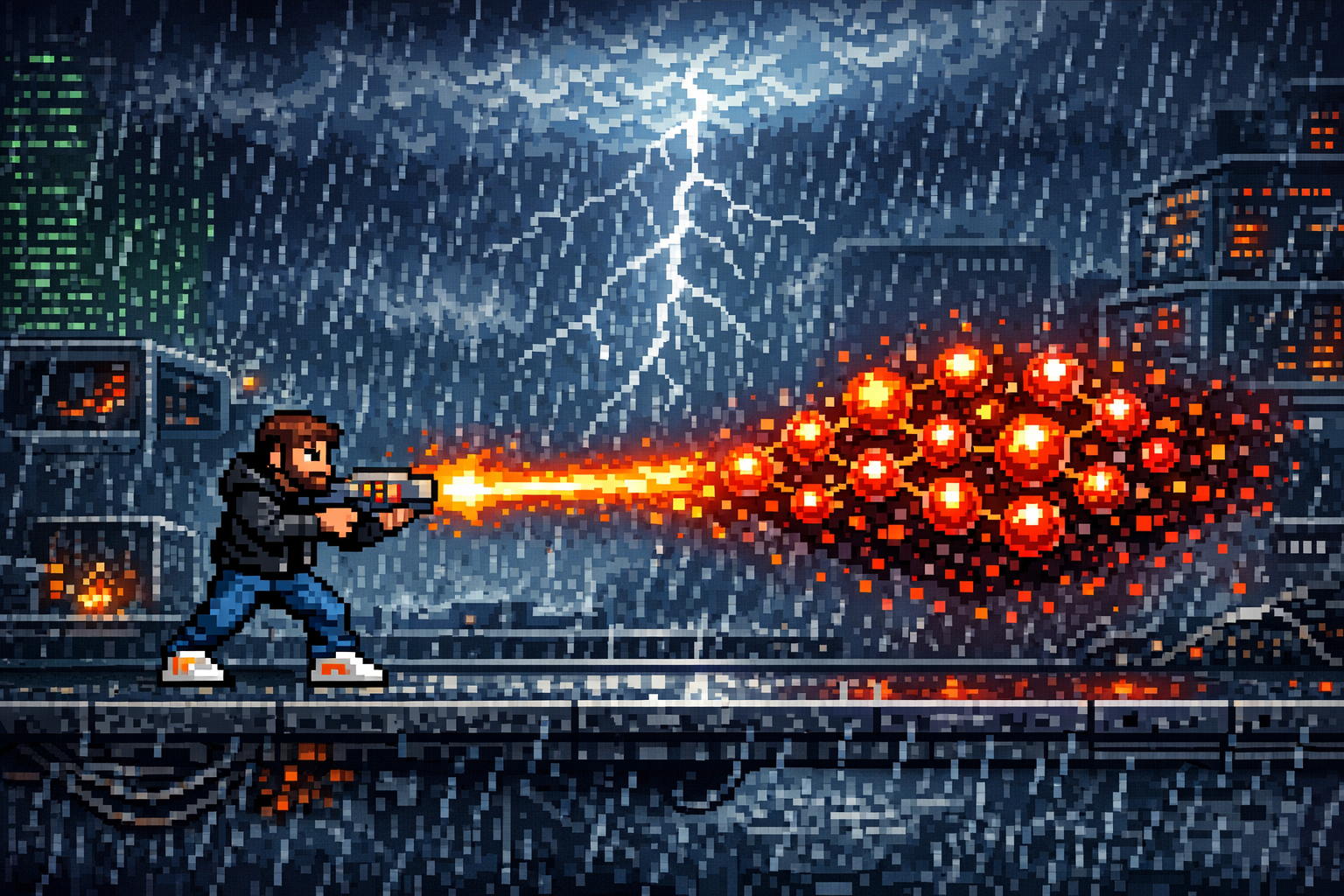
The CVE Swarm is the signature first enemy of Chapter 2 and the clearest expression of how this chapter changes the pace of the game.
The CVE Swarm marks the shift from hidden asset visibility problems to active exposure pressure. It forces the player to react immediately instead of methodically scanning the environment.
Fast, low-health, and dangerous in groups, this enemy teaches the player that small threats can still create major risk when ignored for too long.
Vulnerability buildup, alert fatigue, and the reality that systems do not become unstable only from one critical issue, but from many unresolved issues piling up together.
A strong first Chapter 2 enemy should be readable, memorable, and mechanically clear.
The swarm should move forward with slight wave-like instability so it feels alive, volatile, and hard to ignore.
One swarm is manageable. Several together create cascading pressure and force the player to prioritize quickly under stress.
It should read as a cluster rather than a single solid object: glowing nodes, unstable edges, and the sense of many vulnerabilities moving as one.
Chapter 1 centered on visibility and discovery. Chapter 2 changes the tempo by replacing hidden threats with immediate pressure.
Ghost Devices had to be revealed. Rogue Terminals controlled space. Duplicate Entities created confusion. Orphan Nodes disrupted the environment from above.
The CVE Swarm is different: it does not hide, wait, or deceive. It rushes the player directly and creates danger through accumulation and speed.
CVE Swarms are fast-moving clusters of vulnerabilities that overwhelm systems if ignored.